

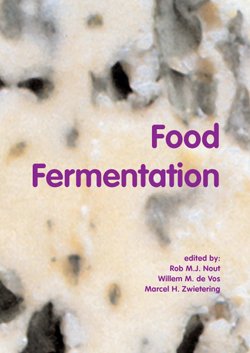
FOOD FERMENTATION (PB 2005)
Hardcover
by NOUT R.M.J.(Author)
(0
reviews)
Inhouse product
Price
$36.79
/1
• Free Standard Shipping Transit in 8 – 14 Business Days
• Expedited Shipping Transit in 6 – 8 Business Days
Share
Top Selling Products
-
 $21.15
 -
$14.74
-
$10.97
-
$20.71
-
$17.88






Reviews & Ratings
0
out of 5.0
(0
reviews)
There have been no reviews for this product yet.
Fermented foods, a diverse group of everyday items enjoyed globally, are made from both animal sources (like milk, meat, and fish) and plant sources (such as grains, starchy crops, beans, and fruits). Despite their ancient origins, fermented foods are highly popular not only for their appealing taste and aroma but also for their extended shelf life and safety, their nutritional benefits, and the various health-promoting qualities recently discovered.
This book reflects the content of an international advanced course offered by the Graduate School VLAG of Wageningen University in The Netherlands. It concentrates on the most current technologies and scientific advancements in both academic and industrial settings. These advancements contribute to the identification and specification of microorganisms used as fermentation starters, modern experimental methods for product and process development and control, and high-speed analytical techniques that enable the precise creation of customized fermented food products.
The book covers topics such as the microbial diversity of starter lactic acid bacteria, yeasts, and molds: product technology and functionality related to flavor development and its control: the health-enhancing aspects of foods and of probiotic and nutraceutical microbes: European regulations concerning fermented foods and ingredients: the modeling and control of bacterial and fungal fermentation processes: and the importance of "-omics" approaches (genomics, transcriptomics, proteomics, metabolomics) in designing starter cultures, controlling metabolism, and ensuring safety. This volume is undoubtedly a crucial update for research and development professionals and advanced students in food science and technology in Noida, Uttar Pradesh, India, and around the world.
Additional Product Info :
ISBN 10 :
9076998833
9076998833
ISBN 13 :
9789076998831
9789076998831
Publisher :
WAGENINGEN ACADEMIC PUBLISHERS
WAGENINGEN ACADEMIC PUBLISHERS
Language :
English
English
Dimensions :
6.5 x 0.5 x 9.25
6.5 x 0.5 x 9.25
Item Weight :
0.44 kg
0.44 kg
Frequently Bought Products
Product Queries (0)
Login Or Registerto submit your questions to seller
Other Questions
No none asked to seller yet
Top Selling Products
-
$21.15
-
$14.74
-
$10.97
-
$20.71
-
$17.88

Arista Kart International, your global gateway to the world of books. With a curated inventory of over 1.5 million titles, we are proud to be one of the largest online bookstores, connecting readers across continents with stories, knowledge, and inspiration.