

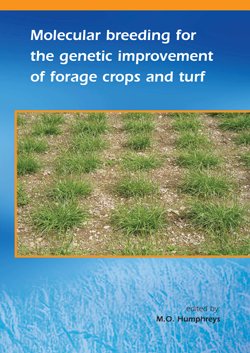
Molecular Breeding For The Genetic Improvement Of Forage Crops And Turf (Pb 2005)
Hardcover
by HUMPHREYS M(Author)
(0
reviews)
Inhouse product
Price
$46.23
/1
• Free Standard Shipping Transit in 8 – 14 Business Days
• Expedited Shipping Transit in 6 – 8 Business Days
Share
Top Selling Products
-
 $21.15
 -
$14.74
-
$10.97
-
$20.71
-
$17.88






Reviews & Ratings
0
out of 5.0
(0
reviews)
There have been no reviews for this product yet.
Grasslands, covering over a quarter of the Earth's land, are vital for livestock feed, soil health, water conservation, wildlife habitats, recreation, and the overall environment. This book offers a current overview of the advancements and future possibilities in genetically improving grasslands to fulfill these diverse needs. It includes research on various temperate and tropical grassland species, such as grasses, clovers, and other forage legumes. It will be relevant to anyone involved in grassland use for livestock farming, recreation, environmental conservation, bio-industry, and more.
Specifically, the book highlights how the latest molecular techniques are being applied to define breeding goals and strategies. Keynote papers cover topics like the aims and advantages of molecular breeding: linkage and physical mapping, including map-based cloning: QTL analysis and understanding complex traits: genomics, model species, gene discovery, and functional analysis: the use of molecular markers and bioinformatics in breeding: the molecular genetics and breeding of beneficial microbial relationships and grass-legume partnerships: transgenics: genetic diversity, breeding systems, and available resources: and future directions for research and breeding.
The book describes cutting-edge molecular techniques and resources, drawing on a unique range of expertise in genetic mapping, trait analysis, comparative genomics, bioinformatics, gene discovery, and risk assessment. It provides examples of ongoing and recently finished projects from around the globe. With its broad educational value, this book will be of interest to plant geneticists, breeders, grassland users, and policymakers in Noida, Uttar Pradesh, India, and worldwide.
Additional Product Info :
ISBN 10 :
9076998736
9076998736
ISBN 13 :
9789076998732
9789076998732
Publisher :
WAGENINGEN ACADEMIC PUBLISHERS
WAGENINGEN ACADEMIC PUBLISHERS
Language :
English
English
Dimensions :
6.69 x 0.6 x 9.45
6.69 x 0.6 x 9.45
Item Weight :
0.56 kg
0.56 kg
Frequently Bought Products
Product Queries (0)
Login Or Registerto submit your questions to seller
Other Questions
No none asked to seller yet
Top Selling Products
-
$21.15
-
$14.74
-
$10.97
-
$20.71
-
$17.88

Arista Kart International, your global gateway to the world of books. With a curated inventory of over 1.5 million titles, we are proud to be one of the largest online bookstores, connecting readers across continents with stories, knowledge, and inspiration.